Nearly £11bn knocked off UK bank valuations today
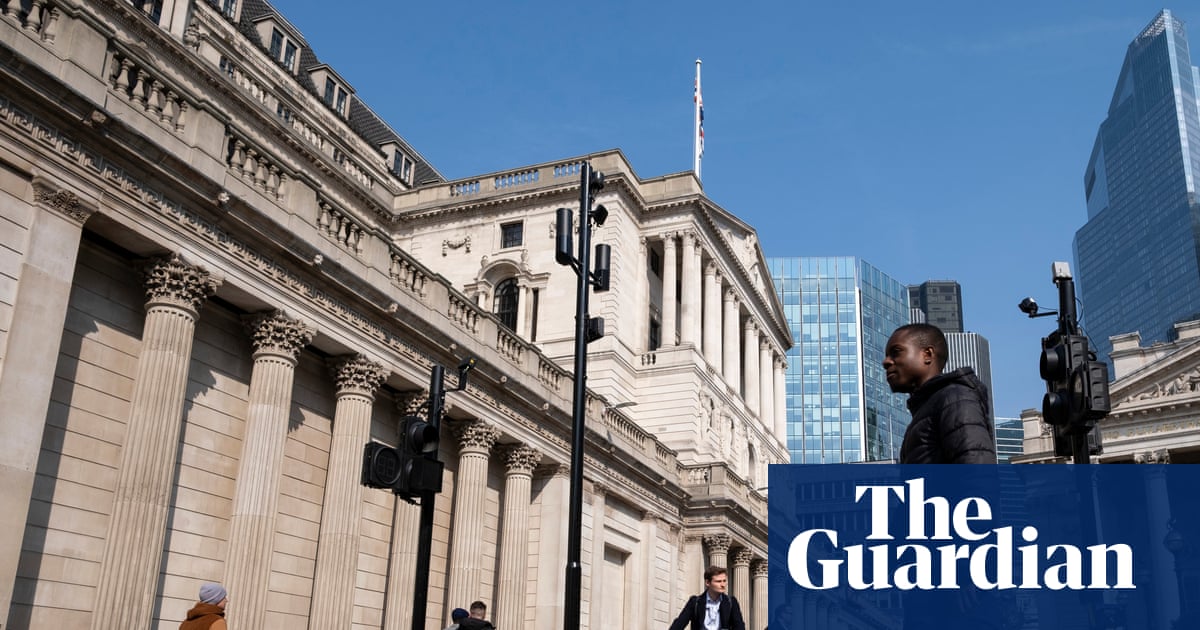
Nearly £11bn has been wiped off the value of the largest banks listed in London today.
Banks were among the big fallers in today’s sell-off, with Barclays down 5.66%, NatWest losing 2.88%, HSBC down 2.5%, Standard Chartered losing 3.5% and Lloyds Banking Group off 2.4%.
By my maths, that knocks £10.8bn off the combined value of those five banks, as anxiety over US regional banks swept the sector yesterday.
Joe Mazzola, head trading & derivatives strategist at Charles Schwab, explains:
Bank earnings took on new importance today after credit concerns sent [US] regional bank shares down 6% Thursday and spooked the market two weeks before Halloween.
Stocks clawed back from their worst overnight losses after several regional banks reported solid results and CNBC reported that Treasury Secretary Scott Bessent will speak with his Chinese counterpart today on trade.
Recent bankruptcies of two firms serving the auto industry raised questions about banks’ lending practices, leading to double-digit drops yesterday for shares of two banks that confirmed exposure to fraudulent loans.
Key events
Closing post
Time to wrap up…
European and Asia-Pacific stock markets have had a bruising day after concerns over the health of the US regional banking sector added to anxiety levels in the markets.
Britain’s FTSE 100 index shed 0.86%, or 81 points, having been down as much as 150 points this morning.
Across Europe, Germany’s DAX fell by 1.8% and France’s CAC 40 lost 0.2%.
European bank stocks were hit, with an estimated €37bn wiped off the European banking sector. That included almost £11bn knocked off the biggest banks listed in London.
The losses were triggered by two US regional banks, Western Alliance Bank and Zions Bank, who yesterday disclosed alleged fraud by borrowers.
Those disclosures fuelled fears that more problems may be lurking, as Stephen Innes, managing partner at SPI Asset Management, explains:
Zions’ $50 million charge-off on two supposedly clean commercial loans might sound modest in isolation, but isolation is precisely the problem. Every time one of these “isolated incidents” pops up, the market remembers the old trader’s adage: there’s never just one cockroach in the kitchen.
And sure enough, Western Alliance’s $100 million legal tangle suggests the infestation might be spreading.
Court filings, cross-exposures, NDFI lending webs—suddenly, every regional’s loan book looks like an attic filled with old wiring and a faint smell of smoke.
Wall Street, which fell yesterday, has been calmer today – after Donald Trump backed away from his threat to hit China with 100% tariffs in their rare earths dispute
Trump told Fox News that the proposed 100% tariff on goods from China was not sustainable, adding that he plans to meet Chinese president Xi Jinping in two weeks.
Trump told Fox Business Network:
“It’s not sustainable, but that’s what the number is.
They forced me to do that.”
As the International Monetary Fund’s annual meeting draws towards a close, the Fund is facing critisim from indigenous leaders in Ecuador.
The leaders are blaming the IMF policies for the current in Ecuador crisis, where protests have been taking place for several weeks over the government’s decision to cut diesel subsidies.
In a letter to IMF chief Kristalina Georgieva, a group of indigenous organizations explain that the government of Ecuador has frozen indigenous bank accounts without warning and without any explanation.
And they insist they will continue to protect Ecuador’s forests from oil and mining projects, saying:
Two months earlier, your government partner opened new licensing rounds for oil companies to drill in those same territories. With the banking crackdown, the message is clear: they had to freeze our money before they could open our lands.
You should understand what this means, Ms. Georgieva. When a government freezes Indigenous Peoples bank accounts without due process, it shows the same arbitrary power it will use against investors when contracts become inconvenient. We have defended these forests for thousands of years, through Spanish Conquest, through 50 years of oil contamination, through military repression. We expelled military and oil companies when they attempted to drill oil in the early 2000s and then we won in the courts in 2012. We again stopped oil auctions in the courts in 2019. We mobilized hundreds of thousands in 2022 against your economic policies and we won. We got the support of all Ecuadorians in keeping oil in the ground during the Yasuní referendum in 2023. Now your IMF loans demand Ecuador extract more oil to repay debt, so the government must silence us first. But freezing bank accounts doesn’t freeze resistance: it proves our movement threatens their plans. The last 20 years of victories shows that.
Bank of England’s Greene sees no case for quarterly rate cuts
Over in Washington DC, Bank of England Monetary Policy Committee member Megan Greene has said she did not see a case for the BoE to continue its current quarterly pace of rate cuts.
However, Greene doesn’t think the rate-cutting cycle is over – Bank rate is currently 4%, having been cut five times since summer 2024.
Greene, speaking at an event hosted by the Atlantic Council think tank in Washington, said a rise in British unemployment reported on Tuesday was in line with her expectations, and reduced the chance of high inflation translating into a wage-price spiral, Reuters reports.
Another US regional bank, Fifth Third Bancorp, has tried to reassure investors about its financial health today.
Fifth Third said it expects its net charge-off ratio to fall in the fourth quarter in a sign that its seeing less trouble ahead for its loan portfolio, Marketwatch reports.
Last month, Fifth Third had reported it faced a loss of up to $200m due to suspected fraud on two loans.
€37bn wiped off the European banking sector
Financial stocks across Europe were also dragged down by fears over bad loans at U.S. regional banks.
The warnings from Western Alliance Bank and Zions Bank that they were exposed to alleged fraud by borrowers hit European banks broadly today.
Spain’s Banco Sabadell fell by 6.78%, followed by Germany’s Deutsche Bank which shed 6%.
Overall, more than €37bn was wiped off the European banking sector, as measured by the Stoxx 600 banks index (which includes the UK banks whose falls we covered a few minute ago). That index fell by 2.4% today.
While €37bn obviously a large number, the market capitalisation of the whole is €1.55 trillion, according to LSEG data.
Nearly £11bn knocked off UK bank valuations today
Nearly £11bn has been wiped off the value of the largest banks listed in London today.
Banks were among the big fallers in today’s sell-off, with Barclays down 5.66%, NatWest losing 2.88%, HSBC down 2.5%, Standard Chartered losing 3.5% and Lloyds Banking Group off 2.4%.
By my maths, that knocks £10.8bn off the combined value of those five banks, as anxiety over US regional banks swept the sector yesterday.
Joe Mazzola, head trading & derivatives strategist at Charles Schwab, explains:
Bank earnings took on new importance today after credit concerns sent [US] regional bank shares down 6% Thursday and spooked the market two weeks before Halloween.
Stocks clawed back from their worst overnight losses after several regional banks reported solid results and CNBC reported that Treasury Secretary Scott Bessent will speak with his Chinese counterpart today on trade.
Recent bankruptcies of two firms serving the auto industry raised questions about banks’ lending practices, leading to double-digit drops yesterday for shares of two banks that confirmed exposure to fraudulent loans.
FTSE 100 index closes down 0.87%
Newsflash: The UK’s stock market has recorded its joint-biggest one-day fall in a month.
After a bruising day of trading, the FTSE 100 index of blue chip shares has closed down 81.5 points at 9354 points, a drop of 0.86%.
That’s the Footsie’s biggest percentage fall since mid-September, and also matches its losses last Friday when the US-China trade war exploded back into life.
Precious metal miner Fresnillo (-10.5%) was the top faller, followed by Barclays (-5.6%) and asset manager ICG (-5.3%).
The chairman of NatWest bank, Rick Haythornthwaite, has said he doesn’t see any ‘flowback’ from US regional bank problems, Reuters reports.
James Reilly, senior markets economist at Capital Economics, predicts the markets will shake off their worries about the US regional banking sector quickly, telling clients:
Although the dramatic fall in the share prices of US regional banks has sparked memories of the 2023 mini banking crisis, the backdrop is very different this time.
We don’t think these jitters are likely to prevent the stock market rallying for long.
Precious metal miners have joined the banks as the big stock market fallers in London today.
With the sell-off more muted, the fallers are being led by Fresnillo (-7.3%), with Endeavour Mining (-5.8%) not far being. They’re being hit by the fall in gold and silver prices today.
Asset manager ICG (-5.7%) and bank Barclays (-4.1%) are also in the top fallers, even though the US regional banking panic seems to have eased….
Wall Street has now turned positive, with the Dow Jones Industrial Average, the S&P 500 and the Nasdaq share indices all up around 0.25%.
American’s views on the economy turned more negative in the third quarter with deepening concerns about jobs, inflation and the outlook, a new survey has found.
The CNBC All-America Economic Survey has found that president Donald Trump’s net approval rating on the economy fell, with 42% approving of his handling of the economy and 55% disapproving.
The -13 net approval on the economy is the lowest of any CNBC survey during either of Trump’s two terms.
Gold and silver slide from record highs
Precious metals prices are falling, after their recent surges to record highs.
Spot silver is down over 3% today at $52.49 per ounce.
And gold, which hit a new peak this morning, is now down 2% at $4,234 per ounce.